Connecticut winters are no joke. From November through March, temperatures regularly drop below freezing, snowstorms can cancel plans for days at a time, and the grey skies can stretch for weeks without a break. For families with toddlers, this creates a genuine challenge — young children need to move, explore, and socialize every single day, and winter makes outdoor play impractical for months at a time.
The solution isn't more screen time. It's structured indoor play — and Connecticut families who prioritize it consistently report healthier, happier, better-sleeping toddlers through the winter months. Here's the science behind why it matters and the best options available to CT parents.
The Science: Why Toddlers Must Move Every Day
The American Academy of Pediatrics recommends that toddlers get at least 3 hours of physical activity per day — spread across the day in active play. This isn't a suggestion. It directly affects cognitive development, sleep quality, emotional regulation, motor skill development, and social skills.
When winter keeps Connecticut toddlers cooped up at home for days at a stretch, the effects are measurable. Sleep becomes disrupted. Emotional regulation becomes harder. Attention spans shorten. And the behavior that results — the tantrums, the restlessness, the inability to focus — is often a direct result of unspent physical energy rather than a developmental issue.
Studies consistently show that children who engage in regular structured physical play demonstrate better executive function, improved language development, and stronger social skills than those with limited physical activity — regardless of season.
What Structured Indoor Play Provides
Not all indoor time is equal. Screen time, while occasionally necessary, doesn't provide the same developmental benefits as active, physical, social play. Here's what structured indoor play at venues like Kiddie Kruisers CT specifically provides that staying home doesn't:
Driving, running, climbing, and navigating physical spaces develops the large muscle groups and coordination that toddlers need to build.
New environments, novel challenges, and cause-and-effect play (like steering a car on a track) build neural pathways that support learning.
Playing alongside and with other children teaches turn-taking, sharing, negotiation, and empathy in real time — skills that can't be taught at home.
Craft activities and free play in a stimulating environment give toddlers an outlet for creative thinking and self-expression.
Toddlers who get adequate physical activity sleep longer, fall asleep faster, and wake less during the night. This one change transforms family life.
Physical play burns off the cortisol (stress hormone) that builds up from inactivity. Active toddlers are demonstrably calmer toddlers.
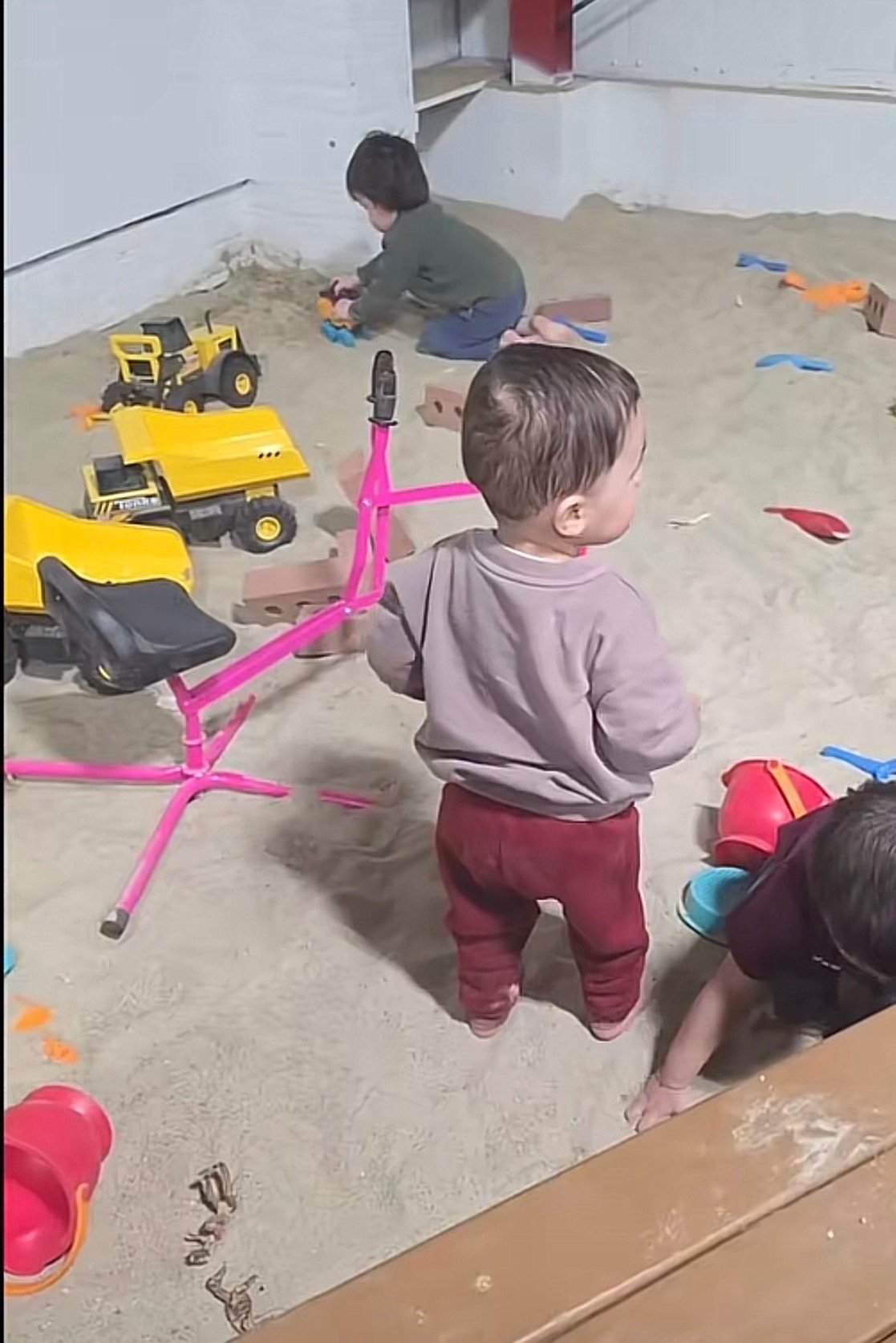
CT's first indoor sandbox at Kiddie Kruisers CT — sensory play that supports toddler development year-round
Why Connecticut Winters Make This Especially Important
Most of the United States gets some winter. Connecticut gets a particularly demanding one. Between November and March, Connecticut experiences an average of:
- Over 45 inches of snowfall annually
- Temperatures below 32°F on approximately 80 days per year
- Extended periods of grey skies that reduce outdoor motivation even on warmer days
For families with toddlers, this means outdoor play is genuinely off the table for large stretches of time. Having a reliable, affordable indoor play destination that your toddler genuinely loves is not a luxury in Connecticut — it's a practical necessity for maintaining their development and your sanity through the long winter months.
The families who navigate Connecticut winters most successfully with toddlers typically have 2–3 reliable indoor activity options they rotate through. Kiddie Kruisers CT's multi-visit pass was specifically designed for this — buy it in the fall and use it through the winter whenever you need a reset day.
What Kiddie Kruisers CT Provides That Home Can't
At Kiddie Kruisers CT in Meriden, the five activity zones are specifically chosen because each one serves a different developmental function:
- Powerwheels Racetrack — gross motor, spatial awareness, cause-and-effect, independence
- Indoor Sandbox — sensory processing, fine motor, creative construction, focus
- Play Zone — social play, sharing, imagination, language development
- Kraft Corner — fine motor, creativity, following instructions, pride in accomplishment
- Parent Lounge — because parents need restoration too, and a well-rested parent is a better parent
The combination creates a complete developmental environment in one hour that would take all day to replicate at home — and simply can't be replicated in the same way because the social element, the novel environment, and the dedicated space are irreplaceable.
Making Indoor Play a Winter Routine
The families who get the most value from Kiddie Kruisers CT treat it as a weekly routine rather than an occasional treat. Here's what that looks like in practice:
- Pick one consistent day — Wednesday afternoon or Thursday morning tends to work well for most families
- Build it into your week like any other appointment — it reduces the decision fatigue of "what are we doing today?"
- Use the multi-visit pass to reduce the per-session cost and eliminate the friction of paying each time
- Let your toddler know it's "racetrack day" the night before — the anticipation is part of the experience
❄️ Make This Your Winter Routine
Kiddie Kruisers CT runs year-round in Meriden, CT. Sessions every hour Wed–Sun. Multi-visit passes available — never expires.
🎟️ Book Your Session